

To Transform Territories We Need New Institutions
The imperative for applied research organizations in fragile territories

This article argues that the persistence of struggling regions despite decades of intervention stems not from resource deficits but from the absence of organizations that close the loop between knowledge production and implementation, positing that such organizations, though rare, have existed before and can be built again.
The ideas herein contained are the result of an ongoing research project by Liminal members Nicolas Delgado Alcega, Gabriele Pizzi, Caterina Stocchi, and Paolo Bianco on institutional forms suited to address territorial fragility.
The Persistence of Territorial Fragility
Drive through the interior of almost any European country and you will encounter them: towns where the only people visible on a Tuesday afternoon are elderly; where storefronts stand empty along main streets that were once the commercial heart of a region; where schools have consolidated and consolidated again until children must travel an hour to reach classrooms that themselves may close within the decade. These are places whose populations have been declining for two or three generations; places where the young leave and do not return; where the trades that once sustained families have contracted beyond the point of viability. The built fabric tells the story plainly enough. Houses maintained by families for centuries stand empty or pass into the hands of outsiders who visit for a few weeks each summer. Public buildings constructed in moments of nineteenth-century demographic explosion and optimism now seem absurdly oversized, monuments to expectations that history did not fulfill.
The phenomenon has many names in policy discourse: inner peripheries, shrinking regions, areas of demographic decline, places that don’t matter—this last a term coined with deliberate provocation by the economic geographer Andrés Rodríguez-Pose to capture what he argues is a systematic inattention by metropolitanized elites to territories that have been losing ground for decades. In Italian, the vocabulary has a particular texture: aree interne, territori fragili, territori marginali. The words gesture toward something more than economic underperformance. They suggest a condition of exposure, of vulnerability to forces that these places cannot control; a precariousness that manifests in everything from the thinning of local institutions to the psychological weight carried by those who remain, who watch their communities contract and wonder whether their children will have any reason to stay.
What makes the condition of these territories puzzling is their persistence. The map of territorial fragility in Europe today looks remarkably similar to what it looked like thirty years ago, which in turn resembles the pattern of fifty years ago. The names change; initiatives come and go; funding streams open and close; pilot projects demonstrate success and then vanish without apparent consequence. But other than expanding, the underlying geography endures. This is strange because it is not for lack of attention. Territories that struggle have been studied, diagnosed, funded, piloted, and evaluated more thoroughly than many thriving regions ever will be. European cohesion policy has poured billions into territorial convergence. National rural development programs have targeted exactly these areas. Universities have conducted research; consultants have produced reports; NGOs have run demonstration projects. And yet the gap between fragile territories and dynamic ones has not closed. In many cases it has widened.
The standard explanation for this persistence was resource deficit: these places lack capital, lack skills, lack infrastructure, lack connectivity to the networks where opportunity concentrates. Pour in the missing ingredients and development will follow. But the persistence of fragility despite decades of resource transfer suggests that the diagnosis is incomplete. If the binding constraint were simply resources, the transfers should have worked by now. Money has flowed; money continues to flow. What has not happened is the conversion of that money into durable change in how these territories actually function within our remarkably urbanized society—in the systems that structure daily life, economic activity, service provision, and the relationship with other specialized territorial contexts.
Something else is missing. Not resources, but the capacity to convert resources into transformation. Not experiments, but the capacity to learn from experiments and embed that learning into how the territory operates. Not knowledge about these places, but the institutional infrastructure that keeps knowledge in place rather than allowing it to flow outward toward metropolitan centers where it can be published, cited, and career-advancing without ever returning to inform action in the territory that produced it. The problem is not what fragile territories lack but what they cannot retain: the organizational capacity that closes the loop between ideation, intervention, and lasting change.
Territories as Bundles of Socio-Technical Systems
To understand why this loop fails to close, we need a different way of seeing territories altogether—not as containers of resources waiting to be optimized, but as complex assemblages of interconnected socio-technical systems shaped by decades or centuries of accumulated decisions, investments, regulations, and habits. A territory is not just land and people; it is a particular configuration of energy systems, mobility patterns, food production networks, housing stock, service delivery models, governance arrangements, and relationships between human settlement and the surrounding landscape. Each of these systems has its own logic, its own history, its own infrastructure both physical and institutional.
These systems do not float freely, available to be reconfigured at will. They lock in. The innovation scholar Frank Geels uses the term regimes to describe the stable configurations that emerge when technology, institutions, user practices, cultural meaning, and infrastructure align and begin to reinforce one another. A regime is not simply a set of physical assets; it is those assets plus the skills required to operate them, the regulations that assume their existence, the business models built around them, the professional identities tied to them, the expectations that take them for granted. Regimes are self-reinforcing because they channel investment toward what already exists, because the skills and knowledge needed to operate them accumulate over time, because alternatives look risky and expensive and illegible to actors who have grown up within the regime’s logic.
Regimes operate within what Geels calls landscapes: the broader macro-level forces that regimes cannot control but must somehow respond to. Demographic transitions that shift where people live and how populations age. Climate pressures that challenge traditional land uses. Technological disruptions that obsolete established ways of getting a job done. Policy reorientations at the European or national scale that change what is permitted, subsidized, or required. New geopolitical circumstances. These landscape pressures do not ask for permission before they arrive. They bear down on regimes whether the actors within those regimes are prepared or not.
Fragile territories, understood in this framework, are places where intense contemporary landscape pressure meets regimes that were already haphazardly adapted to the shocks of the early twentieth century. The demographic stagnation and don’t Inés outmigration is hollowing out the workforce and eroding the tax base; the energy transition is creating conflicts with ; climate change is making traditional agricultural practices untenable; policy is shifting toward decarbonization in ways that impose costs on territories whose regimes were configured for a carbon-intensive world. And the regimes that structure daily life in these places were built for a world that is ceasing to exist. They are locked in, but locked into the wrong configuration. In Nassim Taleb’s vocabulary, they are fragile in a precise sense: their thin actor ecologies mean that the failure of any one node disproportionately affects the rest of the system. When one school closes, education is compromised across the region. When one employer leaves, the labor market goes on life support. There are no backups, no redundancies, no alternative pathways. Everything lies along a delicate thread, and landscape pressures keep pulling at it.
The Coupled Engine of Regime Transition
Transitions between regimes, meaning the shift from one regime configuration to another, do not happen spontaneously. The socio-technical literature has spent decades mapping how they actually occur, and the mechanism that emerges has two essential components that must work in tandem.
The first is what researchers call niches: protected spaces where alternatives to the dominant regime can develop, shielded from the full selection pressure that would otherwise eliminate them before they have a chance to mature. When a new practice or organizational form first emerges, it is typically worse than the incumbent by conventional metrics—more expensive, less reliable, harder to integrate with existing systems, unfamiliar to users and regulators. Under normal competitive conditions, these nascent alternatives would be selected against; they would fail before they had a chance to improve. Niches provide shelter. Subsidies, regulatory exemptions, dedicated funding, patient capital willing to accept losses during a learning phase—these create conditions under which experiments can fail without fatal consequences, under which people developing alternatives can learn from mistakes and iterate toward configurations that might eventually compete. A demonstration project, a pilot district, an experimental farm: these are niches. They are where new configurations get tested and refined before they face the world.
The second component is translation: the pathways through which learning generated inside niches that prove they can provide value under the current landscape moves into regime-level structures and actually changes how they operate. In this case, how the territory operates. A successful pilot, however brilliant, is not a transition. It is at best the precondition for one. The transition happens when the lessons from that pilot embed themselves in market demand, procurement rules, professional training curricula, infrastructure standards, operating routines. Translation is what happens when the exception becomes the rule: when the demonstration becomes the default; when learning crystallizes into new lock-in better adapted to landscape pressures than what it replaced.
Both components must operate together; they must couple into what we might call a transition engine. Experimentation without translation produces isolated successes that never accumulate into system change. Pilot projects work beautifully within protective conditions, get written up in reports, win awards, attract visitors—and then vanish when the funding cycle ends, their lessons never entering the operating system of the territory. The knowledge generated leaves with the consultants who ran the project, gets published in journals read elsewhere, contributes to careers that unfold far from where the experiment occurred. Translation mandates without experimentation, on the other hand, produce a different pathology: the wholesale importation of templates developed elsewhere, applied to local conditions without the learning that would adapt them to work in practice, failing in ways that confirm to local actors that externally-generated solutions do not work, exacerbating a culture of distrust and disbelief in change.
Consider what the coupled engine requires. It requires actors capable of generating niches—designing experiments, mobilizing resources to protect them, creating conditions under which learning can occur. It requires actors capable of translation—carrying learning into regime-level structures, possessing the legitimacy and relationships to actually change procurement rules or infrastructure standards. And it requires these actors to be connected, working within a shared framework, oriented toward the same territorial transformation rather than pursuing separate agendas that never align.
In dynamic regions with thick actor ecologies—multiple universities, clusters of innovative firms, capable development agencies, well-resourced administrations, dense networks of civic organizations—this coupled engine can emerge from coordination among existing institutions. But fragile territories do not have thick actor ecologies. They have thin ones. Fewer universities, and those that exist are often oriented toward extracting talented young people rather than developing territorial capacity. Fewer innovative firms. Weaker administrations with less capacity to update regulations based on what experiments reveal. When experiments do happen, they are typically run by external actors—consultants, researchers, NGOs—who arrive with funding and leave when the funding ends, taking the learning with them. The territory hosts the experiment but does not retain the capacity.
The result is that each intervention starts from scratch. The same diagnostics get repeated because the findings of previous diagnostics did not persist in any institutional form. The same pilots get run because the lessons of previous pilots were not embedded in any structure that could carry them forward. The same promising results achieved—and then the funding ends, the external actors depart, the documentation sits in archives that no one consults, and the territory returns to its baseline. This is why persistence persists. It is not that nothing happens in fragile territories; it is that what happens does not accumulate.
The Existing Institutional Gap
If the problem is a missing coupled engine, the question becomes: which institutions could be plugged into the existing regime-arrangement to provide what is missing? The difficulty is that the institutions of the kind that we already have are structured to do something else.
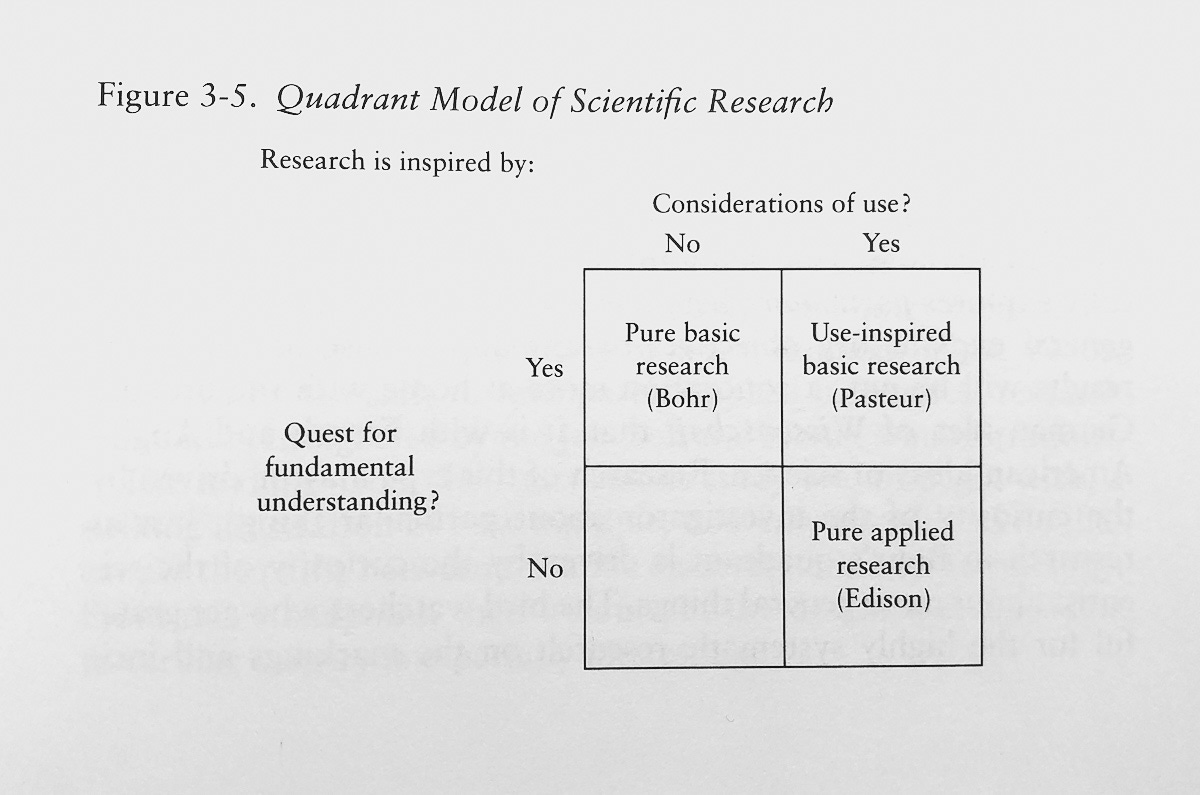
The science policy scholar Donald Stokes offered a framework that helps clarify why. Stokes argued that research could be mapped along two dimensions that operate independently: the quest for fundamental understanding on one axis, consideration of use on the other. This produces four quadrants rather than a simple continuum from basic to applied. In Bohr’s Quadrant—named for the physicist Niels Bohr—research seeks fundamental understanding without concern for practical application. This is the traditional academic model, the model that research universities typically reward. The goal is to produce knowledge that travels: knowledge general enough to be published, cited, and built upon by researchers elsewhere. A university conducting research in Bohr’s Quadrant may study a fragile territory intensively, may produce excellent scholarship about the dynamics of decline—but that scholarship contributes to disciplinary conversations happening in metropolitan universities, advances careers that unfold elsewhere, becomes part of a global knowledge stock without any mechanism ensuring that it returns to inform action in the territory that was studied.
In Edison’s Quadrant—named for the inventor—research focuses entirely on use without concern for fundamental understanding. This is the space occupied by industry R&D, and in the development space, the consultancy model. External experts arrive with frameworks and best practices developed elsewhere, apply them to the local situation, produce recommendations, and move on. When the recommendations do not fit—when the template collides with local complexity—there is no mechanism for updating the underlying knowledge. The consultancy’s value proposition depends on having portable expertise; if every engagement required developing new understanding from scratch, the business model doesn’t hold. So implementation failures in one context do not feed back naturally to improve what gets recommended in the next.
Pasteur’s Quadrant is different. Named for Louis Pasteur, it describes research that pursues fundamental understanding and consideration of use simultaneously, allowing each to inform the other. Pasteur did not choose between understanding the microbiology of fermentation and helping French winemakers solve their practical problems; he did both, and each deepened the other. His fundamental research was motivated by practical problems; his practical interventions were informed by fundamental understanding; the failures of his interventions revealed gaps in his understanding; the advances in his understanding suggested new interventions. The loop closed. He still established microbiology as a unified science.
The problem in fragile territories is that Pasteur’s Quadrant is largely empty because we are currently living in an age of acute institutional isomorphism that has pushed institutions towards behaving on the edges of Stokes’ quadrant. Universities extract. Consultancies apply templates. Regional development agencies may have territorial mandates, but they rarely have research capacity. Living labs attempt to involve local actors in experimentation, but they typically lack the staying power to see experiments through to regime-level change. The coupled engine requires an organizational form that has not yet been formalized: that exists so rarely and embryonically that it cannot be taken for granted.
Applied Research Organizations
We call institutions that fill Pasteur’s Quadrant in fragile territories Applied Research Organizations, or AROs. The name matters less than the topology—the shape of operations that distinguishes this organizational form from others that might seem superficially similar. An ARO is defined not by its legal form (it could be a foundation, a cooperative, a public agency, a hybrid) but by the architecture of its activities. It closes the loop.

Concretely, this means an ARO maintains research capacity oriented toward understanding the specific systems that structure life in its territory—the configuration of regimes and the pressures bearing down on them. But understanding is not the endpoint; it feeds directly into designing interventions, running pilots, testing alternatives. And the results of implementation feed back into understanding: when pilots fail, the failure generates information about what the original analysis missed; when they succeed, the success raises new questions. The same people or teams that generate knowledge apply it; the same people who apply knowledge are positioned to learn from application. The organization does not hand off implementation to external actors who will depart when the project ends. It carries learning forward across project cycles, building on what came before rather than starting over each time.
This integrated configuration requires resources that most research organizations do not control. An ARO typically manages physical spaces—buildings, land, facilities—that become platforms for experimentation. This may seem like a distraction from research, but controlling space is what allows the ARO to create the protected conditions that niches require: a building where a new service model can be tested without requiring buy-in from skeptical landlords, a plot of land where alternative practices can be demonstrated over multi-year timelines, a facility where training can happen and the coalition has a physical home. Space is not incidental; it is the material substrate that makes the work possible.

The coalition matters too. Regime changes require action by many actors—municipalities, businesses, civic organizations, educational institutions—whose coordination is necessary for any intervention to take root. The ARO assembles and maintains these coalitions, builds the relationships and shared frameworks that enable coordinated action. This is implementation infrastructure, not a stakeholder list to be consulted at appropriate moments.
And the ARO must persist across timelines that exceed typical funding cycles. Transitions unfold over decades; project funding runs three to five years. AROs that survive have found ways to bridge this temporal gap—through endowments, diversified revenue, integration into institutional structures that provide continuity. The solutions vary, but the problem is constant: without organizational continuity across the timelines that transition requires, the loop cannot stay closed long enough for learning to accumulate into transformation.
AROs are not a theoretical construct. Across Europe, organizations matching this topology have emerged in fragile territories, taking different legal forms and operating in different domains but sharing the closed-loop architecture. We have identified over 30 cases of organizations that approximate the qualities we are describing; the actual number is certainly larger. What they share is the integrated configuration: research capacity and implementation capacity and the organizational structure to connect them and the territorial rootedness that means learning accumulates in place.
The Topological Recurrence of AROs
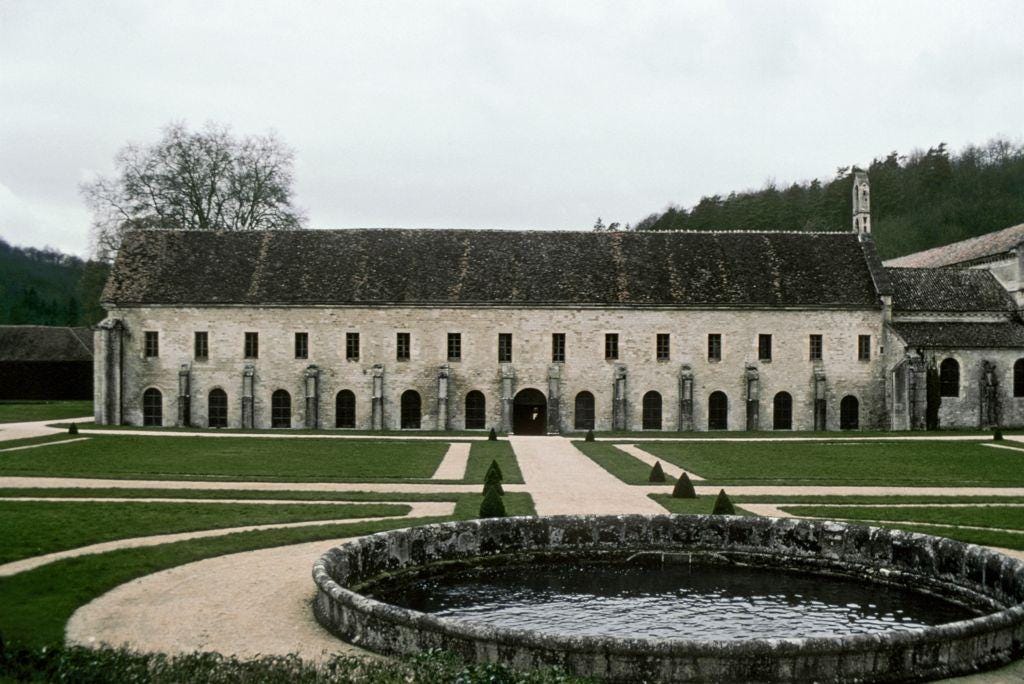
The ARO topology is not a contemporary invention. It is a rediscovery—a name for an organizational form that has recurred whenever territories have successfully converted marginality into productivity through sustained, place-bound, cumulative learning. The historical precedents reveal what makes the topology work.
The Cistercian monasteries of medieval Europe present perhaps the clearest case. Founded beginning in the late eleventh century as a reform movement within Benedictine monasticism, the Cistercians established their houses in marginal lands—swamps, forests, mountainsides that earlier settlements had bypassed, territories considered unsuitable for conventional agriculture and therefore available for religious communities seeking withdrawal. But what began as withdrawal became transformation. The monks developed systematic approaches to the landscapes they inhabited: drainage techniques for marshland, forest management practices, innovations in metallurgy and milling, organizational methods for coordinating labor across large territories. Each abbey was a closed-loop operation: monks studied their specific territory, developed techniques suited to its conditions, applied those techniques, observed results across seasons and years and decades, refined their approaches. The monastery’s survival depended on making its land productive; the incentives aligned.
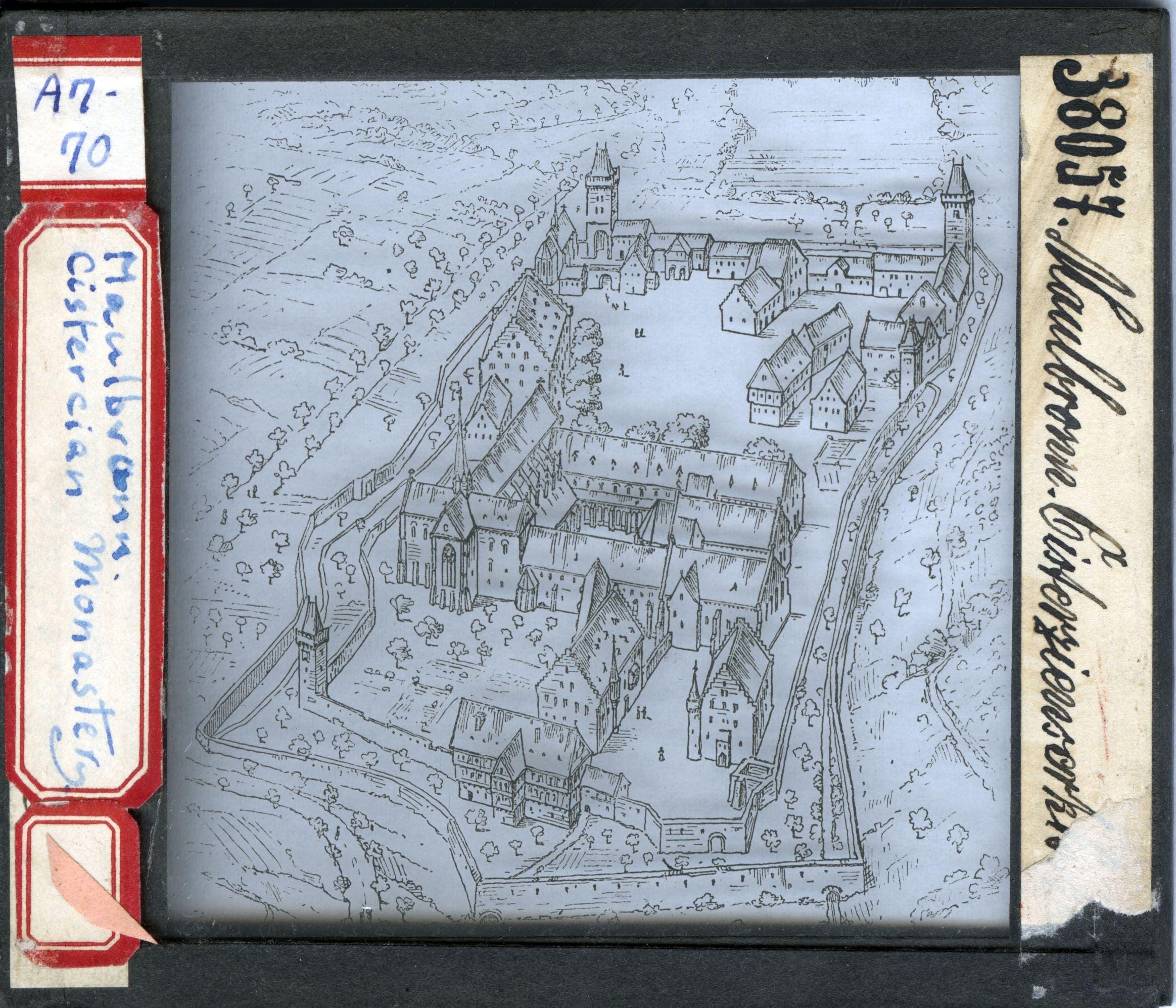
Crucially, the learning accumulated—and it circulated. The Rule of St. Benedict required stabilitas loci, stability of place: monks vowed to remain in one monastery for life. But the Cistercian order was also a network. The annual General Chapter at Cîteaux brought abbots together to share techniques and solve problems. Visiting circuits carried knowledge between houses. Daughter monasteries maintained relationships with their founding abbeys. The monks stayed in place, but they belonged to an order that allowed flows of information across different territories, facilitating the place-based work of each monastery while inviting generalization and knowledge transfer. What worked to drain marshes in Burgundy could be adapted—not copied wholesale, but adapted—to different conditions in Yorkshire or Lombardy. The human capital needed to effect these adaptations was anchored into place.

This capacity for territorial transformation created demand. Owners of feudal estates and regional elites invited Cistercian communities because they were drivers of development. A monastery that could convert marginal land and poorly skilled populations into a productive territory was valuable; nobles competed to provide sites and endowments. The order expanded across Europe—over seven hundred abbeys by the thirteenth century—not despite operating in difficult territories but precisely because it had developed the institutional form capable of transforming them.
The American Land-Grant Colleges, established by the Morrill Acts of 1862 and 1890, represent a more recent and formalized version of the topology—one created deliberately by policy. Each institution received a mandate with three integrated components: research relevant to the agricultural and industrial conditions of its state, teaching that combined practical subjects with liberal education, and extension that disseminated knowledge to farmers and practitioners who would never set foot on campus.

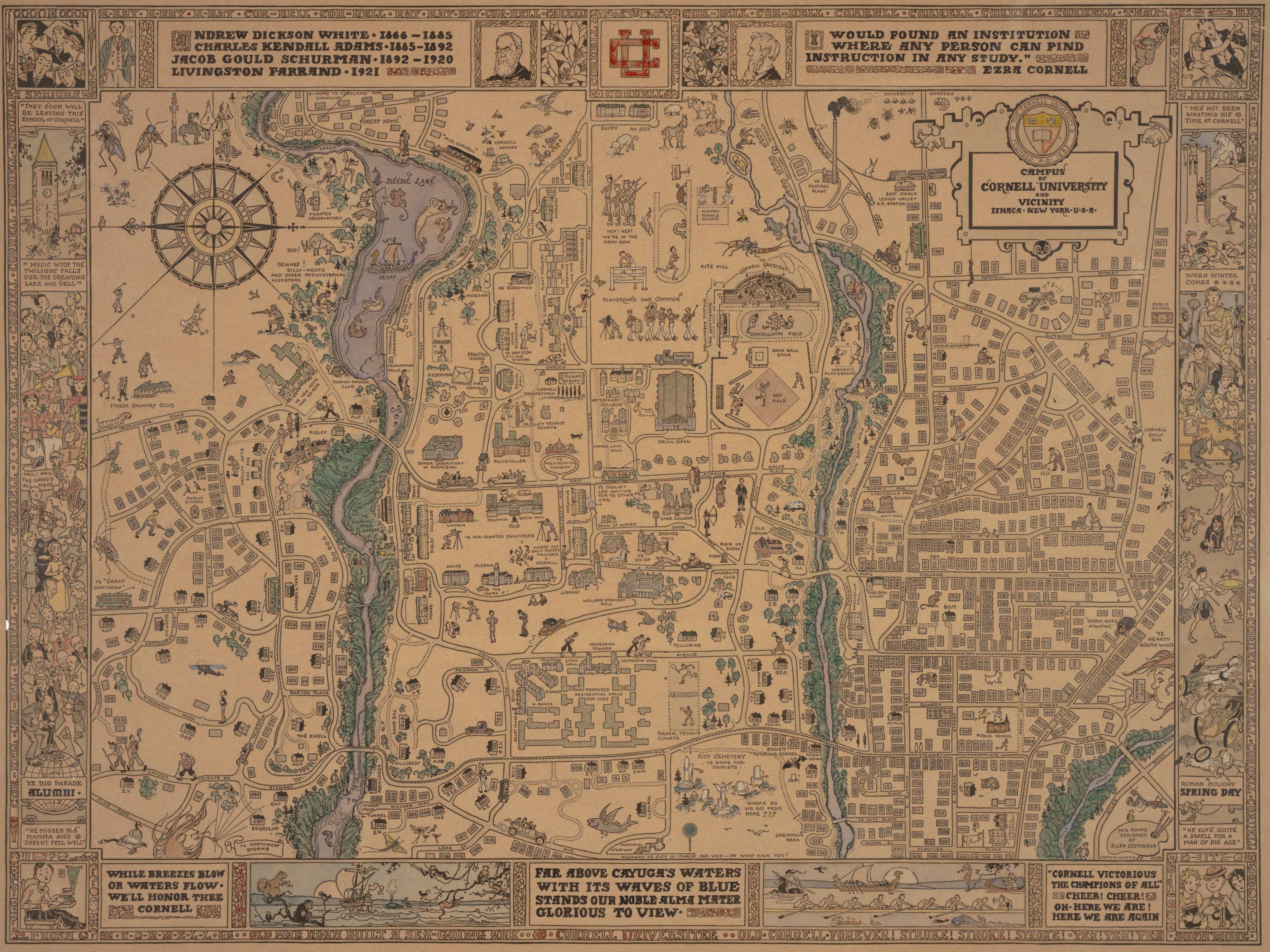
The founding of Cornell University illustrates how territorial decision-makers provided resources to attract and anchor these institutions. In 1865, Ezra Cornell, a state senator who had made his fortune through Western Union, offered $500,000 and his 300-acre farm on East Hill in Ithaca to establish New York’s land-grant university. He personally managed the state’s federal land scrip, acquiring timber-rich land in Wisconsin and holding it for decades rather than selling immediately as other states did. The patient stewardship paid: when the land was finally sold in the early twentieth century, it returned over $5 million to the university’s endowment—at prices averaging nearly $10 per acre compared to the 30-40 cents others had accepted. Cornell’s investment created the financial foundation that allowed the university to develop into what remains one of the premier agricultural research institutions in the world, its College of Agriculture and Life Sciences still operating under the land-grant mission that shaped its founding.
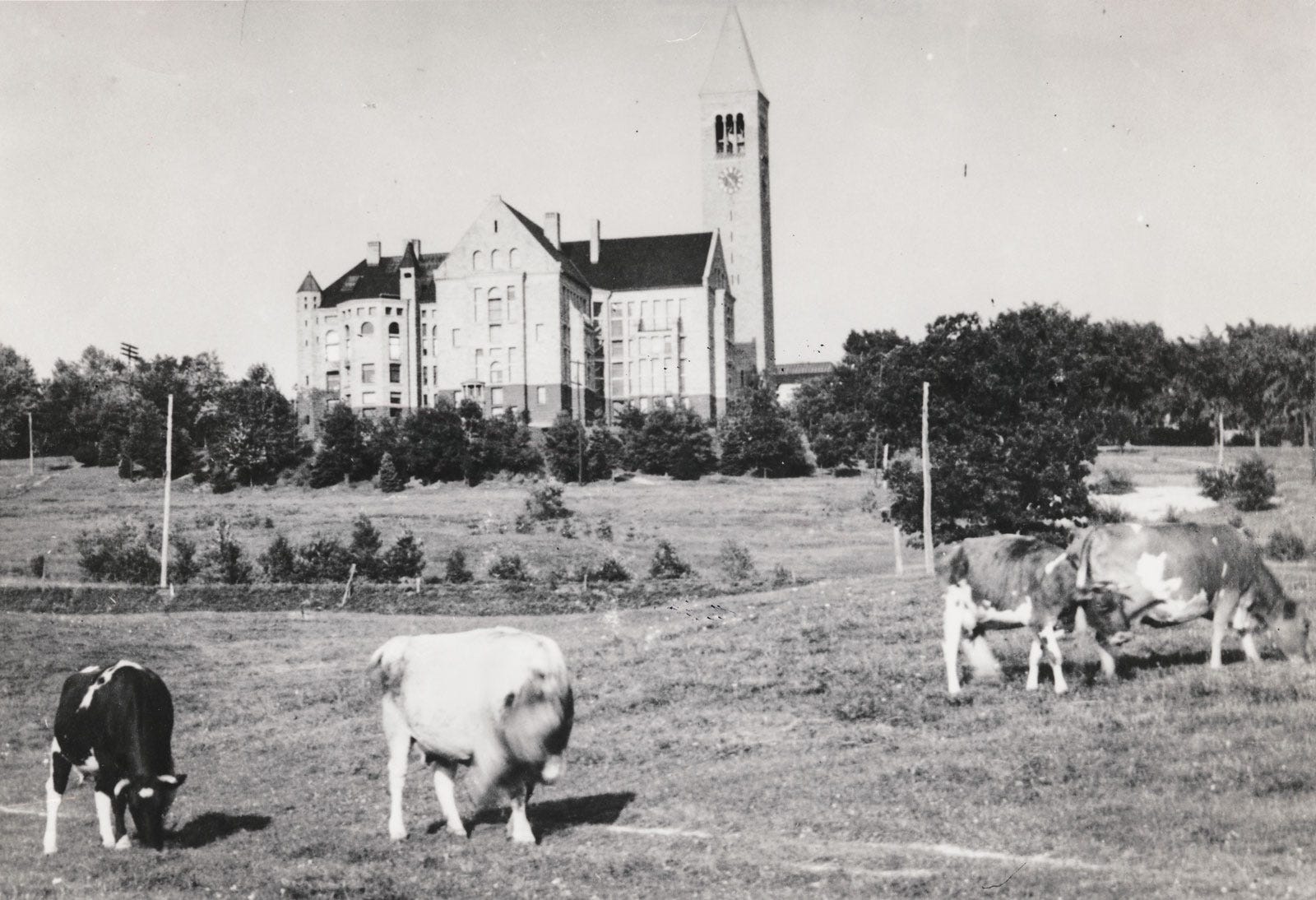
The Extension Service, formalized in the Smith-Lever Act of 1914, was the translation mechanism: county agents stationed throughout each state, physically present in the territories they served, carrying university research to farmers and carrying practitioner problems back to researchers. The loop closed. Researchers studied local soils, local climate, local pests, local market conditions; they developed techniques suited to farmers working that land. When farmers encountered problems, they could bring them to county agents who understood both the research and local conditions; the agents could relay problems to researchers already oriented toward use-inspired inquiry. Knowledge did not have to travel far to find application; application did not have to wait for knowledge to arrive from distant centers.
What the historical cases share is the conjunction of closed-loop topology, stability of place, institutional survival tied to territorial outcomes and scaling mechanisms. The monks stayed because their Rule required it; their monastery prospered or declined with its land. The land-grant universities stayed because their mandate was state-specific; their legitimacy rose or fell with their usefulness to their state’s farmers and industries. In both cases, the institution could not succeed by extracting value and moving on. Its fate was bound to the territory’s fate.
The Contemporary Stakes
We are entering a period in which the ARO topology becomes simultaneously more necessary and more possible than it has been in the recent past.
More necessary because policy is shifting. The European Union’s programming period from 2028 onward is being framed around place-based transformation: an expectation that territories receiving cohesion funds will develop the capacity to convert resources into durable systemic change. The rhetoric of smart specialization is giving way to rhetoric of transition capacity. The Green Deal’s territorial implications make this concrete: decarbonization targets, just transition requirements, climate adaptation mandates impose transformation agendas on territories regardless of whether they possess the institutional infrastructure to pursue transformation coherently.
This creates a widening asymmetry. Dynamic regions with thick actor ecologies can meet new expectations by coordinating among existing institutions. Fragile territories cannot. Their actor ecologies are too thin, their organizational infrastructure too sparse. The policy shift raises expectations without providing the means to meet them so far.
But there is another way to frame the moment. Fragile territories are edge conditions, and edges have properties that centers lack. Precisely because their regimes are weakening, there may be more room for alternatives than exists in dynamic regions where lock-in is stronger. In Taleb’s framework, fragility is not the opposite of resilience but of antifragility: the capacity to gain from disorder, to convert volatility into improvement rather than merely surviving it. Antifragility requires exposure to stressors, but it also requires conditions under which exposure can generate learning. Edges concentrate volatility; the question is whether they can develop the institutional infrastructure to convert that volatility into learning.
This is speculative, but not without historical grounding. The Cistercians did not transform prime agricultural land in prosperous regions; they transformed marginal land that established institutions had bypassed. The innovations they developed in those margins later diffused to centers that could not have generated them precisely because centers did not face the pressures that made innovation necessary. The edge was the laboratory; the center, eventually, was the beneficiary.
AROs and Leverage Points
AROs are not a solution to territorial fragility. They are a leverage point, and the distinction matters.
A solution would be something that, if implemented at sufficient scale, would resolve the problem. AROs do not meet this standard. They are difficult to create, requiring conjunctures of talent and resources that cannot be summoned at will. They operate at scales too small to directly address system-level dynamics that produce territorial inequality across Europe. A single ARO transforming a single territory does not change the broader allocation of investment, talent, and opportunity.
But leverage points are not solutions. A leverage point is a place in a system where a small shift can produce effects larger than the apparent scale of intervention, because the shift addresses a binding constraint. Adding resources to a territory without translation capacity is like adding fuel to an engine without spark plugs; the fuel accumulates but nothing moves. Adding translation capacity, even in modest amounts, can begin to convert existing resources into movement.
This helps explain why decades of resource transfer have failed to close the gap between fragile and dynamic territories. The resources were not trivial; cohesion policy has moved billions of euros toward convergence. But resources are not the binding constraint. They are necessary but not sufficient. What is binding is the institutional gap: the absence of organizations capable of generating niche experiments, translating learning into regime change, and sustaining this work across the timelines that transition requires.
There is also a structural reason why AROs are particularly important in fragile territories. In regions with thick actor ecologies, translation capacity can emerge from coordination among multiple organizations. A university generates research; a development agency facilitates application; firms implement; an administration updates regulations. The loop closes across organizational boundaries, through networks and accumulated relational infrastructure. But this distributed model carries transaction costs—trust built over repeated interactions, shared problem definitions, sustained coordination through conflicts. Dynamic regions can afford these costs because they have many actors, dense networks, relational infrastructure accumulated over decades.
Fragile territories cannot. Their actor ecologies are too thin. There are not enough organizations to coordinate; those that exist are too under-resourced to invest in the slow relationship-building that distributed translation would require. If the loop is going to close, it has to close inside a single organization. The ARO topology may be the only viable path to translation capacity given the constraints these territories face. Progress in AI may be the golden ticket that allows AROs to summon the intellectual resources necessary for takeoff at low cost.
The Scaling Problem
This leads to the hardest question: can AROs be created deliberately, or do they only emerge from conjunctures that cannot be engineered?
The historical cases emerged from conditions that policy cannot replicate. The Cistercians arose from a specific moment in medieval religious life, enabled by land grants from nobles seeking spiritual benefit. The Land-Grant Colleges were created by federal legislation during the Civil War, when southern opposition was temporarily absent from Congress. None of these founding conditions can be summoned by a grant program. And the dozens of contemporary cases we have identified share something notable: each seems to be the product of exceptional circumstances, of founders who built organizations against the grain of existing institutional incentives, of conjunctures where talent, resources, and political will aligned in ways that resist systematization.
Samo Burja captures this condition with his concept of Great Founders: exceptional individuals who create new institutional forms before those forms are legible to the broader environment. Before a new type of institution exists in sufficient numbers that its logic is understood—before funders know how to evaluate it, before potential staff know what working in one would mean—creating such an institution requires someone who can operate without the supports that established forms receive. You cannot design a grant program that produces Great Founders; you cannot train them through any curriculum. They emerge, or they do not. ARO emergence currently seems to be emerging following a similar playbook, only at a different scale than Burja argues. AROs are generally led by individuals with the ambition to become regional or intellectual elites.

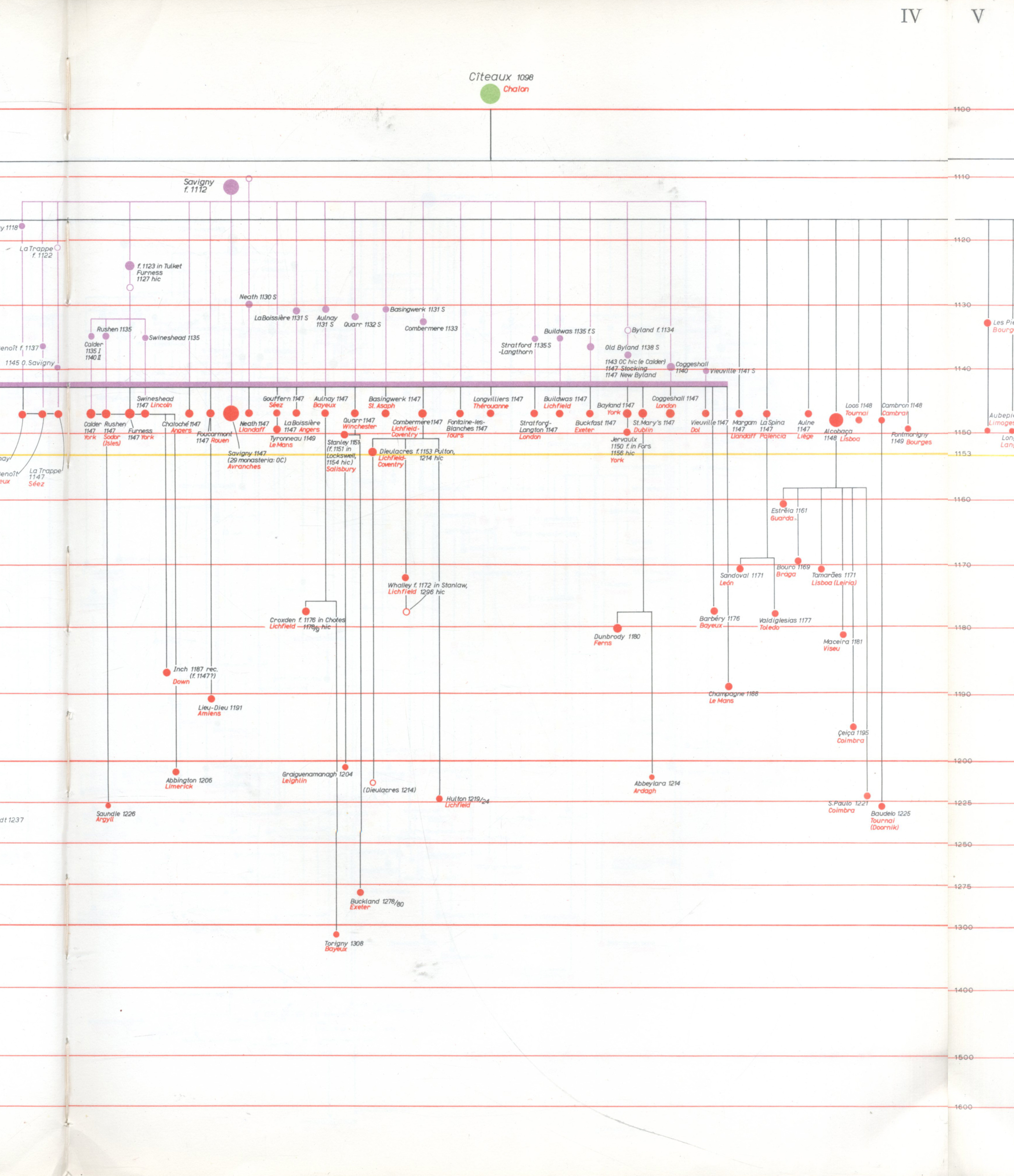
But the monastic parallel can help us understand how to bridge the limitations between the size of local, place-based problems and the scale of the ambitions of Burja’s Great Founders; individuals committed to solving enormous societal problems. The Cistercians did not build only one monastery. They built a network of founding. The great founders—Robert of Molesme, Stephen Harding, Bernard of Clairvaux—did not affect single territories and exhaust their impact. They created an operating system: a codified template (the Carta Caritatis, which governed relations among houses), a training pipeline (new abbots formed through years of monastic life), a support network (mother houses retained relationships with daughter foundations), a multiplication protocol (when an abbey reached sufficient population, it would send monks to found a new house). By the thirteenth century, over seven hundred abbeys operated across Europe. The great ambitions of the great founders had dissipated through nodes of a family of institutions, each applying the same basic logic to different territorial conditions.
Balaji Srinivasan’s concept of the network state suggests what this could look like with contemporary technology. Srinivasan argues that communities can form around shared purposes while being geographically distributed—“cloud first, land last”—using digital infrastructure to coordinate action across distance before materializing in physical territories. The community starts with alignment around a mission, develops shared practices and knowledge systems, then acquires and develops physical nodes while maintaining network-level coordination. Members can move between nodes, carrying tacit knowledge that cannot be codified; digital infrastructure supports the kind of coordination that medieval monasteries achieved through visiting circuits and annual chapter meetings.
For ARO networks, this points toward a specific possibility: a culture of place-based research and transformation that is transnational in its coordination while remaining territorial in its deployment. Different fragile territories share categorical features—depopulating mountain regions, hyperperipheral coastal zones, deindustrialized valleys, inner peripheries losing connection to metropolitan cores. An ARO operating system could potentially serve an entire category of fragility, with network-level knowledge exchange and training infrastructure supporting nodes that remain rooted in and accountable to their specific places. The Great Founder’s task becomes not just building one organization but making that organization’s logic legible and replicable, training successors who can lead new foundations, maintaining relationships that support new nodes through vulnerable early years. Regional elites double down on their management of single nodes of the network. Young talent circulates across the network, redistributing itself in accordance to its capacity and the track record of single nodes.
What the historical and contemporary patterns together reveal is that the question is not simply “can we create AROs?” but “can we create ARO networks?” The Cistercians show that networks of founding can achieve scale that individual organizations cannot. The network state concept shows that technologies now exist to support transnational coordination with local deployment at levels of intensity impossible in the Middle Ages. The case studies we have found show that the ARO topology is not merely historical but actively emerging. What is missing is the deliberate effort to recognize these organizations as a family, to build the network infrastructure that would allow successful founding of large pioneers worth replicating, and to understand that family as the organizational form that addresses the binding constraint in territorial development.
The Work Ahead
The argument traced here began with a puzzle—why the same places keep struggling despite decades of attention and resources—and arrived at an organizational form that addresses the binding constraint: institutions that close the loop between knowledge and action, that stay in place long enough for learning to accumulate, that bind their fate to the territory’s fate.
The question that remains is whether we can build such institutions deliberately, in the places that need them, at the scale the problem demands. The historical precedents show that it can be done, but also that it has always required exceptional founders and favorable conjunctures. The contemporary cases show that AROs are beginning to emerge, but also that they remain rare and fragile themselves, dependent on conditions that policy has not learned to cultivate.
Perhaps the deeper question is not institutional but imaginative: whether we can see fragile territories not as problems to be solved from outside but as places that might develop their own capacity for transformation—places where the volatility that makes life difficult could, under the right institutional conditions, become the pressure that drives innovation. The Cistercians transformed the margins of medieval Europe because they had developed the organizational form capable of learning from marginal conditions. Whether contemporary fragile territories can play an analogous role depends on whether they develop analogous institutions.
This is what AROs are for. This is why naming them matters. The organizational form exists; the historical precedents prove it works; the contemporary cases show it is organically emerging once again. What remains is the deliberate effort to recognize it, refine its incentive-system design, support it, and replicate it—to build the networks that could transform isolated successes into a pattern capable of addressing territorial fragility at the scale the problem actually presents; unlocking new frontier spaces closer to home than we currently believe possible.